
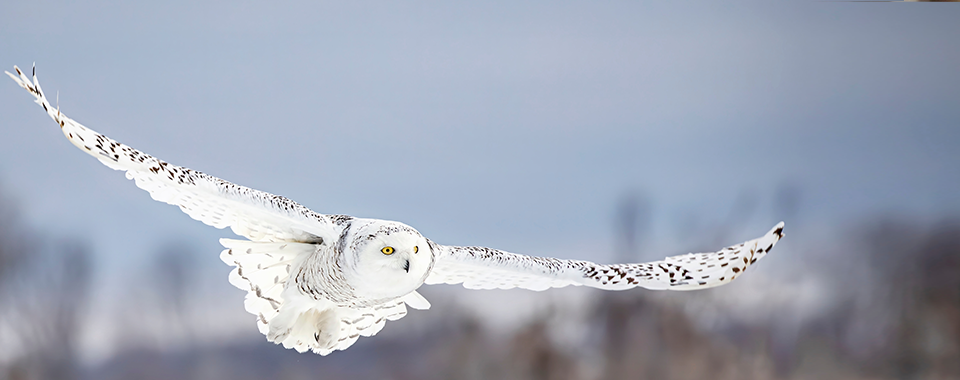
After witnessing one million birds drop dead out of the skies in Fall 2020 in New Mexico due to fires interrupting their migration route in California, drought and starvation in New Mexico, and an ice storm following record high heat wave, our team was devastated with grief. We reached out to Pope Francis for spiritual support and he responded. Father Wismick, now Bishop of Port au Prince, Haiti did a MASS for the birds. Our global alumni responded by sending poems, art-work, and prayers to the birds. This global response was called Project One Million Birds.
Now we knew our new calling had just begun. Our mission was to bring action, no matter how small, to fighting destruction of the natural world and to focus on the beauty and healing forces of our wonderful birds.
We will bear witness not only to the violence perpetrated against our fellow human beings but also to the violence impacting our wonderful and innocent songbirds.
This new YouTube channel (coming soon) will bring hope and beauty to a wounded world.
As our motto says, THERE IS NO HEALING WITHOUT BEAUTY.
Thank you for taking a moment to join us and watch our YouTube Channel. And listen deeply to the songs of our feathered friends that are flying all around us.
Sincerely
Richard and Susan
The Harvard Program in Refugee Trauma (HPRT) is expanding its mission to care for traumatized populations worldwide to include the care of people, animals, plants, and the environment. Planetary Mental Health: Trauma and Recovery is building on the public health and medical work of One Health to include a mental health focus. One Health recognizes that the health of people, animals, and ecosystems are closely linked and interdependent. Planetary Mental Health: Trauma and Recovery (PMH:TR) also builds upon the pioneering foundational work of Deep Ecology, Ecofeminism, and Ecocriticism.
Citizens globally recognize that we are living in a world where violence towards human beings, animals and plants, and the earth itself is rampant. Millions of animals, birds, and humans have been killed, displaced and left homeless by natural disasters and habitat loss. The authors of PMH:TR have witnessed firsthand the death of one million birds in New Mexico in the fall of 2020 (Project 1 Million Birds); and in Australia wild fires and habitat loss have left the iconic koala bear on the verge of extinction.
Planetary Mental Health: Trauma and Recovery is a Project of Hope. It has 10 basic principles. Two stand out:
PMH:TR will offer on its bimonthly YouTube videos optimistic conversations on healing a violent world by biologists, conservationists, economists, ornithologists, artists, and poets. It will tap into the passionate idealism and insights of young persons worldwide. This Project of Hope will offer many storytelling voices, including those of birds and wildlife.
PMH:TR is based upon recent scientific discoveries that all living creatures share a common DNA and are linked by their shared mirror neurons. The latter neuroscientific discovery revealed the biological miracle of collectively experienced empathy found in birds, animals, and all human life. The British government in 2022 legislated that all animals are sentient creatures. The United Nations recognized that all persons have a human right to green space. Pope Francis in his nonsectarian manifesto Laudato Si! (June 2015) brought the brilliant ecological genius of Sant Francis of Assisi into the 21st century.
While HPRT’s Planetary Mental Health: Trauma and Recovery is at an early stage of development, it is hoped this Project of Hope will resonate with health care practitioners, researchers and policy makers, citizens, and communities worldwide. Millions of small groups and individuals globally need to be celebrated for the wonderful work they are already doing to heal a violent world, and PMT:TR serves to unite this diverse community.
Bimonthly YouTube videos include conversations with leading biologists, conservationists, ecologists, First Nations people, artists, ornithologists, poets, musicians, economists, and mental health experts on healing in a violent world will begin soon.
The following references and resources offer an excellent introduction to the new field of Planetary Mental Health: Trauma and Recovery.
Richard F. Mollica, MD, MAR
Professor of Psychiatry
Harvard Medical School
Massachusetts General Hospital, Boston
Susan Rees, PhD
Professor
Discipline of Psychiatry and Mental Health
University of New South Wales, Sydney
With the technical support of
Karen Panetta, PhD
Professor of Electrical and Computer Engineering
Dean of Graduate Education for the School of Engineering
Tufts University
Eugene F. Augusterfer, LCSW
Deputy Director and Director of Telemedicine
Harvard Program in Refugee Trauma
Massachusetts General Hospital, Boston
Karolina K. Chorvath
Storyteller
Trauma-informed Community Leader
Chronic illness/Disability Advocate
Lesley University
Welcome to our Planetary Mental Health: Trauma and Recovery — Project 1 Million Birds YouTube Channel, a platform where action to challenge the ecocide meets more-than-human mental health, compassion, and science.
Our mission is to inspire a global movement to protect and value all life on our precious planet, bringing the mental health community into the heart of the environmental conversation. We believe that humans, animals, and birds are equals in the web of life, and that healing our relationship with the Earth begins by healing and taking action.
Through a unique planetary-focused trauma and recovery lens, our bimonthly series features inspirational stories and powerful interviews with experts from the natural sciences, conservation, arts, medicine, history, psychiatry and beyond. Each one-hour episode features bird images, art, and bird songs. Each session, interview and discussion, offers both educational depth and emotional resonance, exploring how personal, animal and planetary wellbeing are deeply connected.
Join hosts, Professor Richard F. Mollica and Professor Susan Rees as they guide viewers through conversations that restore the rights and status of birds and animals, give hope, strategy and purpose to promote healing and empower action for environmental justice.
Together, we can imagine and create a world where all life is valued, and take real steps to protect it.
